 |
| click image for larger view |
Monday, September 3, 2012

Sunday, September 2, 2012
das HAUS to our house (Daley Plaza); plus Frank Lloyd Wright and the Japanese Print. (and - now in its 15th smash month! - no Prentice on Landmarks agenda)
The dance card for September continues to fill.
 Between Friday, September 21st and Sunday 30th, the Das Haus pavilion will be setting up shop in Chicago's Daley Plaza, part of a twelve-city North American tour..
Frank Lloyd Wright and the Japanese Print
We keep adding to the September Calendar of Chicago Architectural Events. We're now nearing 60 items, and counting. Plus we've linked to another interesting exhibition at the Art Institute, The Formation of the Japanese Print Collection at the Art Institute: Frank Lloyd Wright and the Prairie School. which runs through November 4th in Gallery 107, the long print gallery, closed to the corridor, that's on your right after you enter the rooms for Chinese, Japanese and Korean Art.
As we wrote in our profile, Frank Lloyd Wright's Right-Hand Woman - Rediscovering Marion Mahony Griffin . . .
Wright's collection of Japanese prints led him to be an art dealer. In those frequent periods when his finances were wanting, the architect could usually raise ready funds through sale of some of his prints even as his advocacy of the art of those prints raised their profile, and, presumably, their sale value.
For now, don't forget to check out all the riches on September Calendar of Chicago Architectural Events.
(Spoiler Alert: Bertrand Goldberg's Prentice Hospital has been kept off the agenda of the Commission on Chicago Landmarks still again. This Thursday's meeting marks the 15th consecutive month of the Commission pretending the most pressing landmarks issue in Chicago doesn't exist.)

Das Haus is an exhibition that connects industry professionals in North America with the latest market-ready renewable and energy efficiency solutions from Germany. The project, supported by the German Federal Ministry of Economics and Technology, begins October 2011 and continues on a tour to 12 cities across North America over 13 months. Central to the exhibition is an integrated, fully functioning structure that applies real-world technologies and solutions that meet ultra-low energy building standardsThe 10-day stay will include tours, symposiums, seminars and discussions. We'll bring you more information as it becomes available.
Frank Lloyd Wright and the Japanese Print
We keep adding to the September Calendar of Chicago Architectural Events. We're now nearing 60 items, and counting. Plus we've linked to another interesting exhibition at the Art Institute, The Formation of the Japanese Print Collection at the Art Institute: Frank Lloyd Wright and the Prairie School. which runs through November 4th in Gallery 107, the long print gallery, closed to the corridor, that's on your right after you enter the rooms for Chinese, Japanese and Korean Art.
As we wrote in our profile, Frank Lloyd Wright's Right-Hand Woman - Rediscovering Marion Mahony Griffin . . .
It was a time when Chicago architects were in thrall to Japonisme, the late 19th-century obsession with art and culture from Japan. It's influence touched fashion, popular culture and music (Gilbert & Sullivan's The Mikado wasfirst staged in 1885), as well as French impressionist painters such as Monet, Degas and Van Gogh, who painted his own version of two woodprints by the Japanese master Hiroshige.
Wright was a major collector of classic Japanese woodprints, and, like many of his colleagues, a serial visitor to the Ho-o-den, a half-scale reproduction of an ancient Uji temple that was the real-life Mikado's presentation to the 1893 World's Columbian Exposition. Its simplicity and flowing space were qualities that came to characterize Wright's work.
According to Christopher Vernon, who writes of the Griffin's' work in Australia for the Block exhibition's catalogue,it was another architect, Birch Burdette Long, who brought the Japanese style to the renderings used to depict Wright's buildings. It was Mahony, however, who perfected it. Birmingham describes Mahony's style as “influenced by the sparse detail, continuous line, and skewed perspective and dramatic space of Japanese prints.” The other key element was the increasing importance of landscape, part of the march to an “organic” architecture. Just as Romantic painters were drawn to depicting classical ruins overgrown with vegetation, Mahony's renderings placed buildings within a rich landscape, “sometimes cascading over the floor plans” in her later works.
Wright's collection of Japanese prints led him to be an art dealer. In those frequent periods when his finances were wanting, the architect could usually raise ready funds through sale of some of his prints even as his advocacy of the art of those prints raised their profile, and, presumably, their sale value.
According to the Art Institute . . .
a photograph of the Japanese print exhibition Frank Lloyd Wright organized at the Art Institute in 1908.
courtesy The Art Institute of Chicago
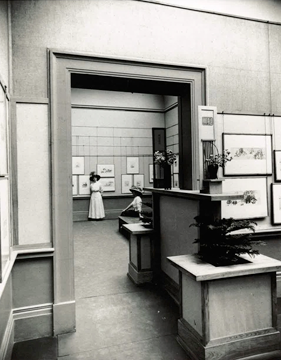
Over the course of his lifetime, Frank Lloyd Wright consistently lent Japanese prints to the Art Institute, but his most important exhibition was undoubtedly a large show of prints he mounted at the museum in 1908 with an installation of specially designed frames and furniture. For the first time, museum visitors in Chicago were treated to a staggering array of Japanese prints from a variety of artists and time periods. The majority of the works on view were lent by Frank Lloyd Wright himself.I hope to see the show soon, and will report back.
. . . This exhibition is comprised of Japanese prints originally purchased from Frank Lloyd Wright, photos of the 1908 exhibition, as well as presentation drawings by Wright and his studio. Many of the drawings are by talented draftswoman Marion Mahony Griffin and show the incorporation of elements found in Wright’s Japanese prints . . .
For now, don't forget to check out all the riches on September Calendar of Chicago Architectural Events.
(Spoiler Alert: Bertrand Goldberg's Prentice Hospital has been kept off the agenda of the Commission on Chicago Landmarks still again. This Thursday's meeting marks the 15th consecutive month of the Commission pretending the most pressing landmarks issue in Chicago doesn't exist.)
Saturday, September 1, 2012

Souls in Flight Amidst the Proud Towers
 |
| click images for larger view |
Before approving the heliport, IDOT also commissioned its own study by Joseph F. Horn and Continuum Dynamics. While calling for reform of regulations, Chicago Mayor Rahm Emanuel expressed his support of the heliport last December.

The shots you see here were taken this past Thursday. A helicopter coming in for a landing on the roof of a tall building between even taller towers in the sea of skyscrapers along Chicago's lakefront is dramatic enough. When you factor in the factors not only of aviation safety but of knowing the helicopter is transporting either a critically ill child or organs being rushed to a transplant, it pulls back the curtain on the indifferent skyscape of a densely constructed city, and intimates the life-and-death struggles, of both soul and of body, that are often taking place behind the blank facades.

Thursday, August 30, 2012
Fuksas, Pecha, Gang, Josef Frank, Iannelli, Millet, Lai, VJAA, Visionary Cities, more - it's the September Calendar of Chicago Architecture Events and Exhibitions
Once more into the breach, dear friends . . .
After taking August off, we've got a very full September Calendar of Chicago Architectural Events.


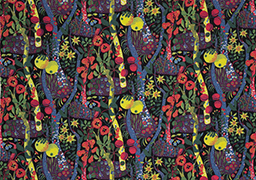 Exhibitions? In addition to the great Skyscraper show at MCA, Wright's Roots at Expo 72 Gallery , and Unseen City at CAF, this month we've got openings for ArchiTech Gallery's Alfonso Iannelli: Modern by Design, The Enduring Designs of Josef Frank at the Swedish America Museum, and, of course, the highly anticipated Building: Inside Studio Gang Architects at the Art Institute.
I'm sure we'll be adding more, but already there's over 50 great events this month. Check out all the details on the September 2012 Calendar of Chicago Architectural Events (and Exhibitions).
After taking August off, we've got a very full September Calendar of Chicago Architectural Events.
among the highlights:
- Massamiliano Fuksas at the Graham (Tuesday, September 11)
- Visionary Cities: Urban and Architectural Futures to Come, a day-long UIC School of Architecture conference chaired by Alexander Eisenschmidt with Sam Jacob, Clare Lyster, Sarah Dunn, Robert Bruegmann, Bill Menking and more, at MCA (Saturday, the 22nd)
- Mikyoung Kim at ITT (Wednesday, the 12th)


- Jimenez Lai offers a "quasi-bookreading" of his Citizens of No Place at the Graham (Tuesday, the 18th)
- Pecha Kucha Volume 23 with Lee Bay, Kara Kotwas and more, at Martyr's (Tuesday, the 4th)
- David Van Zanten on The Work of Louis Julien Millet at the Second Presbyterian Church (Thursday, the 20th)
- Vincent James and Jennifer Yoos of VJAA at IIT (Wednesday, the 19th)
- Learning from Tristan Sterk, AIA Chicago (Thursday, the 27th)
- Women of Influence: The Achievements of Women in Chicago's Early History, at Häfele America Chicago Showroom (Monday, the 10th)
- Glessner House's 125th Anniversary Gala on (Thursday, the 13th)


- Secret Spaces Atop Chicago, with author Tony Macaluso, CAF lunchtime. (Wednesday, the 26th)
- Thomas Leslie discusses How Lateral Bracing Influenced Two Generations of Chicago Skyscrapers, lunchtime at CAF (Wednesday, the 19th)
- The White City: A Musical, at Glessner House (Friday, the 28th)
I'm sure we'll be adding more, but already there's over 50 great events this month. Check out all the details on the September 2012 Calendar of Chicago Architectural Events (and Exhibitions).
Herzog and de Meuron, Souto de Moura, Ando and Venturi add their voices to saving Bertrand Goldberg's Prentice Hospital
 |
| click images for larger view |

The legacy of Bertrand Goldberg’s Prentice Women’s Hospital is unmistakable. It stands as a testament to the Chicago-led architectural innovation that sets this city apart. Chicago’s global reputation as a nurturer of bold and innovative architecture will wither if the city cannot preserve its most important achievements.The growing list - which already included another Pritzker Prize winner, Frank Gehry, has also added Denise Scott Brown, Bjarke Ingels, Jack Hartray, Dan Coffey and George Miller to the original 60+ signers of the original letter in July.
As members of the architecture community, we believe Goldberg’s Prentice should be given a permanent place in Chicago’s cityscape. A building this significant – this unique in the world – should be preserved and reused.
 |
| image: Landmarks Illinois |
You can read the full text of today's letter and see the current list of signatories after the break.
 |
| click images for larger view |


Wednesday, August 29, 2012
I've Got You (1913) Under My Skin - Virtual Restoration at 618 South Michigan
 |
| click images for larger view |
 |
| 618 South Michigan, just this past June |
 |
| 618 South Michigan, 1950's curtail wall rehab |
That facade was replaced in the 1950's when IBM took over the building, with a tight grid of a glass and steel curtain wall that better fit in with it's tenant's ultra-modern branding.
 |
| 624 South Michigan Chicago Musical College, 1908, C.A. Eckstrom, architect |
Alschuler replaced the remarkably open and graceful first and second floor terra cotta facade with a less porous and far more ponderous stone cladding. Splices are seldom happy affairs, but Eckstrom's original, for all its fussy detail, actually seems a lot more amiable - and modern.

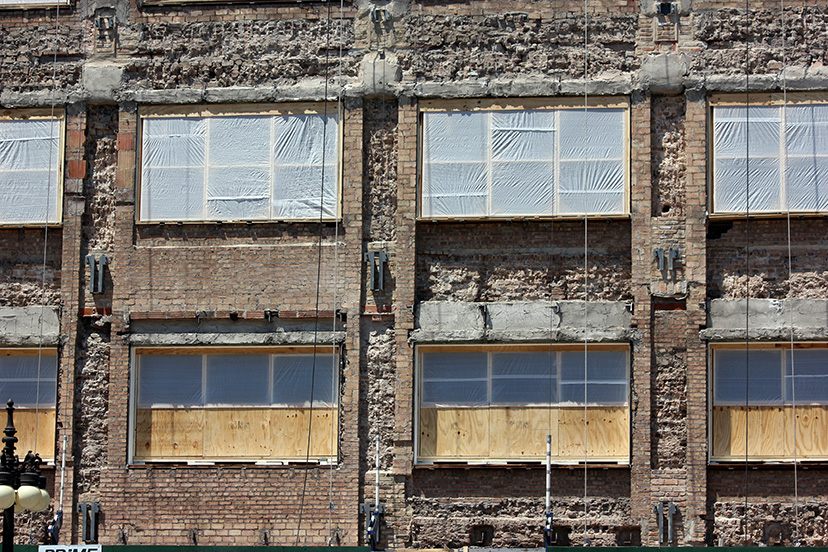

Obviously, the appearance of the facade will change depending on the light. The pictures you see here were taken late afternoon. It will be interesting to see how it resolves in direct sunlight.
Subscribe to:
Posts (Atom)