
Showing posts with label art museum. Show all posts
Showing posts with label art museum. Show all posts
Sunday, July 14, 2013
Model behaviour

Friday, July 5, 2013
Its own reward

Image: The dance of the rats by Ferdinand Van Kessell c.1690, Stadel Museum Frankfurt
Monday, May 27, 2013
Site specific

And then there's the works that will never be returned, the countless religious paintings and icons and sculptures that have been stripped from their context and narratives and put in museums. When you do get to see a great artwork in its original setting it's a startling experience.
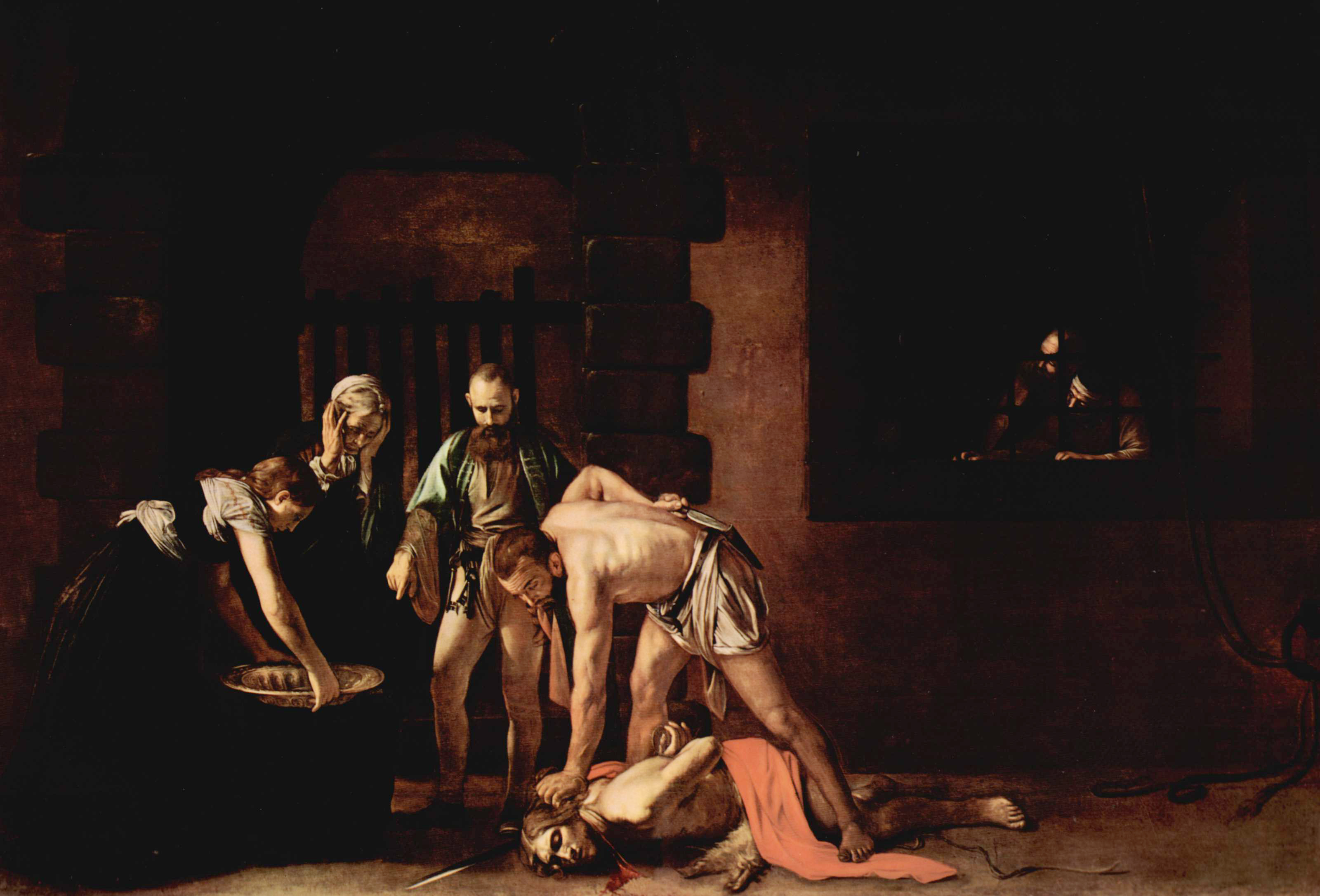
We've just been to St John’s Co-Cathedral in Valetta and met up with Caravaggio’s masterpiece The Beheading of Saint John the Baptist. Ok, it's not exactly accessible, but an extraordinary visual reward is guaranteed. Painted for a side chapel in the Cathedral used by the Knights of Malta, this painting hangs behind the altar exactly where Caravaggio intended. It even witnessed the day the Knights of Malta gathered to defrock the artist after another unpardonable escapade. Like many other art pilgrimages it has its challenges but you’ll never see anything like it anywhere else.
Image: Sure it’s behind a sign and you share the space with a small crowd but there it is, Caravaggio’s The Beheading of Saint John the Baptist right where it belongs.
Wednesday, May 22, 2013
King hit

And how the marketplace loves Gerhard Richter. Even Richter thinks it's on another planet when it comes to his work. "It's just as absurd as the banking crisis. It's impossible to understand and it's daft.” Last year Eric Clapton sold one for $33.4 million making Richter at the time the world’s highest priced living artist. It’s big business the Richter business with total sales for the 30 years leading up to 2010 at $538,118,111, with the single boom year 2010 accounting for $76.9million of that total. So great call by whoever was in charge of the Montreal Museum of Fine Arts in the late eighties.
Image: details from Gerhard Richter’s diptych AB Mediation 1986
Wednesday, May 15, 2013
Watermark

Here’s a story we heard from the guard standing by Marcel Duchamp’s The large glass in the Philadelphia Museum. When the collection of Duchamp’s work owned by Louise and Walter Arensberg was donated to the Museum, Duchamp designed the first installation himself (and some of the key works are still where he placed them). During this process Duchamp learnt that outside one of the blank walls in his gallery was a large courtyard and fountain. He asked for a window to be cut into the stone wall and to Duchamp’s delight the gushing water of the fountain outside was reflected in The large glass. Typically though, despite most of his key works being included in the gallery, there was no sign of his readymade sculpture Fountain.
Images: Top, Duchamp’s The large glass with our guard behind it. Bottom, the ‘Duchamp’ window and the view of the fountain beyond.
Wednesday, May 1, 2013
Pic of the week

Tuesday, April 30, 2013
Take your pic

When Te Papa opens its Andy Warhol exhibition in June watch for its rules about whether or not visitors can take photographs. Of all the artists in the world Warhol must surely be the one who would have least objection to people copying his images seeing as how so many of them were copied in the first place. OK, we're being ingenuous. We've just visited a Warhol exhibition (in the Pittsburgh Museum which will supply the work for the Te Papa exhibition) and they absolutely forbid photography. A small army of student guards has been enlisted and they follow you round like lost puppies carefully positioning themselves to cover all works at all times. This seems particularly pointless given the integration of the phone camera into everyday life. When we visited there were a number of people (ourselves included) taking sneak pics whenever they could. We like to think we were all encouraged by one of the wall texts in the exhibition: “Warhol’s spirit of radical innovation and the notion of the artist as a savvy consumer of images have been an ongoing source of inspiration for subsequent generations of artist.” They may just have well added "and everyone else in the digital era."
Image: a photo we took at the Andy Warhol Museum showing Warhol’s 1964 paintings of Jackie Kennedy. The imagery for the painting came via a newspaper photograph that was converted into silk screens to create this serial portrait.
Thursday, April 25, 2013
working the wall

The Cleveland Museum of Art has been inundated with praise for its digital innovations. We drove up there to check out its prime exhibit - The Wall. This is not some cheesey Pink Floyd rehabilitation (although Cleveland does happen to be the home of the Rock and Roll Hall ofFame) but a significant advance in how to add a digital dimension to an art audience experience. And it’s impressive. It makes you feel a bit like Tom Cruise in Minority Report. Back in 2002 when he manipulated data and images with a flick of the wrist it felt like science fiction. No more. The Wall is just like that. You can theme, you can choose, you can share your selections. At its most spectacular The Wall shows thousands of small images of every object in the Museum's collection. Touch one and it expands to give you more info, connections to similar objects in the collection, ways to make your tour for others to share. You can also rent an iPad (five bucks) to locate yourself in the galleries, tell you what's close to you, give more info, tell stories, email your photos. In some ways it's art education on speed with images and info zapping past as you figure out the system, but it lacks the attitude and personality of MoNA's O. As nothing is going to stop this born again museum education fever though, get used to it. A huge upside at Cleveland is that because they are presenting so many images digitally themselves, you using your own phone and camera is just fine. You can see a short clip of the wall in action here.
Images: top, Cleveland's digitised collection on view. Middle, visitors selecting their favourites. Bottom, using the iPad to locate, expand and photo works in the galleries.
Monday, April 22, 2013
Stella work

Perhaps we’ve complained enough about the placement of barriers in art museums but just when we thought we'd seen it all, along comes an effort that won us over. So for your entertainment here is the Kemper Museum of Contemporary Art in Kansas City doing its very best to protect the pointy part of Frank Stella’s wall sculpture.
Tuesday, February 26, 2013

Wednesday, February 20, 2013
The difference engine

What a difference 18 months makes in art museum land. Back in September 2011 two of our art museum directors logged up 25 years between them. Now (well in a month or so) only two of the six are with the same institution. Elizabeth Caldwell has started the clock ticking at the City Gallery and Cam McCracken has taken her place at the Dunedin Public Art Gallery. That leaves Rhana Devenport at the Govett-Brewster and Jenny Harper at the Christchurch Art Gallery on 6.5 years each. You can check out the situation as it was in 2007 here.
Thursday, January 31, 2013
The upward spiral
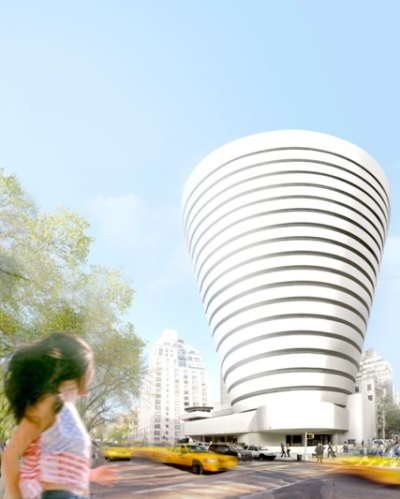
All art museums need more space. Our own Te Papa has plans in the wingsand the Govett-Brewster is off on a new build for their Len Lye Centre. But how about this idea for enlarging the Guggenheim Museum? It comes from Athens-based architects Oiio
Sunday, January 13, 2013

Thursday, December 6, 2012
Exhibitionists

Regular art curators are the ones who get to look at art, pick the shows, mess around in artists' studios, visit entertaining collectors and spend time in the storerooms gloating over the purchases they have made by bidding in exciting auctions. Senior art curators, on the other hand, all too often are handed the administrative end of the stick. They get to spend their time making sure that the regular curators are free to have their fun. Hmmmm.
So eyes will be on Auckland’s recent appointment of Zara Stanhope as senior curator aka principal curator. Will she slip into an admin role or see herself as the kind of lead curator who sets the curatorial agenda, develops the programme and takes on the plum exhibitions? How ever she plays it, it’s now one down and three to go.
Image: Legendary British curator David Sylvester back in the day
Image: Legendary British curator David Sylvester back in the day
Wednesday, November 21, 2012
Munchkins

Tuesday, November 13, 2012
Digital dreams

The art museum world has been pretty slow at coming to terms with the digital world. Even now, and after a considerable amount of encouragement and enthusiasm by Best of 3, they are still really only just at the getting-the-collection-online and maybe-blogging-once-in-a-while stage.
The exception is of course the Christchurch Art Gallery who blog regularly, sometimes provocatively and often amusingly once a day at least and have introduced My gallery image sets as a way of life for many of their fans. The fact is the digital world is fast and rapacious so blogging once a week or putting up a future exhibitions programme that’s just a list, or not having pics of your latest exhibition up three tenths of a second after the show opens (well at least before EyeContact puts them up for you) is kind of lame.
Here’s a list of things we have assembled from talking around and asking people what they would like to see on art museum web sites.
- A constantly updated and annotated list of the latest art books. With no art bookshop left in Auckland (or anywhere else for that matter) this information is now hard to get unless you are professionally engaged.
- Images of the current exhibitions on show (videos would be nice too). It won’t stop people coming (honest).
- Use Tweeting as a communication tool not just a promotional one - it's hard to respond to things that are just about how-amazing-we-are.
- YouTube movies of all talks and lectures the day after they are given. And what with Skype being free and all how about including some off-shore people into some of these discussions.
- The opportunity for the public to join in on cataloguing your collection with tagged information and stories, the Smithsonian already does this on Flickr
- Regular posts, tweets or sets on great objects in the collection you don’t have space to show.
- Pdfs of all your printed catalogues from day one (Volunteers will do the scanning for you)
- A personal report with pics from any curators who’s scored an overseas trips, telling us what’s going on out there (doesn’t have to be formal or the opinion of the institution and could start with Tweets or posting during the trip).
- At least one thing that will give people a laugh once a week
- A chance to donate toward purchasing specific art works for the collection Kickstarter style
There’s plenty more where that came from (thanks G and M), but that’ll do for now.
Thursday, October 25, 2012
Stand up and be counted

We've posted before about the millions of photographs taken of artworks in museums every day and how the Mona Lisa and other destination paintings are almost impossible to see for the hordes of point-and-pressers crowded around them. Now the latest iteration of art-photography is gathering steam: snap a photo in front of your own special artwork. Two for one - an artwork and a friend.
Less endearing are the photos of the rich and the powerful standing in front of paintings they own or control. It's a modern day version of the tradition by which landowners have their estates oiled in behind them by the likes of Thomas Gainsborough and the rest. As John Berger said of Gainsborough’s famous landed gentry painting Mr and Mrs Andrews, “their proprietary attitude towards what surrounds them is visible in their stance and their expression.” So too with modern day portraits of high flyers and their art.
We were reminded of all this when we saw these pics of businesswomen before art in a Next magazine (who knows what issue, we’re talking doctor’s waiting room here). Inevitably the two paintings are by men, but then you can’t have everything.
Images: Top to bottom, Thomas Gainsborough Mr and Mrs Andrews, snapping at the Mona Lisa, peace-signs and Pollock and what comes in Next
Wednesday, October 10, 2012
White Cubism

Nicholas Penny, Director, National Gallery, London in The art newspaper
Monday, October 8, 2012
"Is that the PR Department?....Oh, forget it."

The why-us? moment came as part of the A&Q segment. Two competing teams of comedians are given an answer related to a news event in the last 7 days and have to work out what the question was.
The answer was (you guessed it) the Waikato Museum and the question snapped back by Urzila Carlson? “If Disneyland is the happiest place on earth, what is the saddest?” It got worse.
You can see the full episode here
Sunday, September 23, 2012
Overheads

Subscribe to:
Posts (Atom)